Impersonation scams are when fraudsters disguise themselves as trusted organisations like HMRC, your bank, or even a family member to steal your money or personal details. They’re one of the fastest-growing types of fraud in the UK right now, and anyone can be targeted.
At Suits Me, we’ve seen a rise in customer reporting fake messages from fraudsters pretending to be us. Whether you have an account with us or not, this guide will help you spot the signs, protect yourself, and know exactly what to do if something feels off.
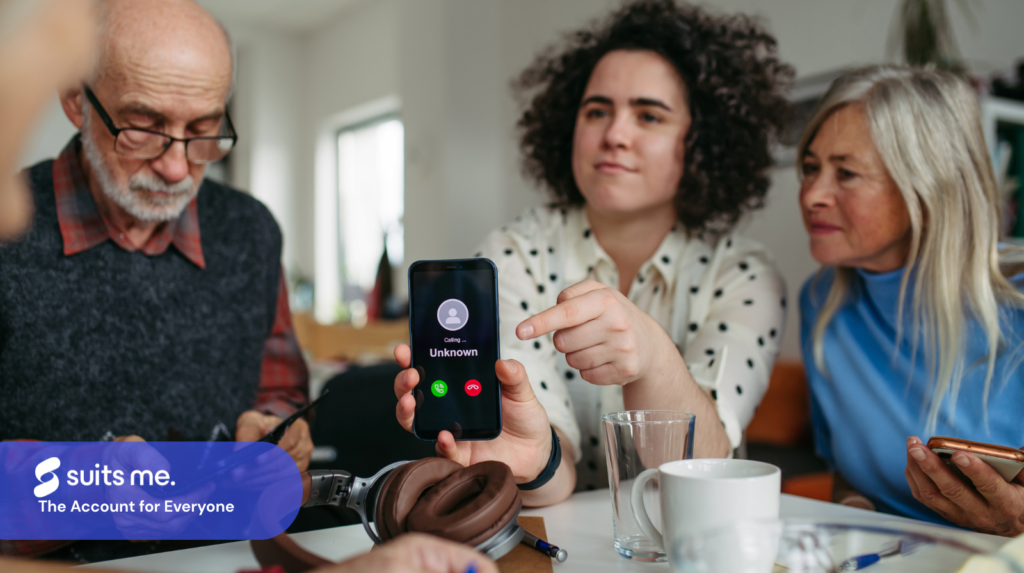
Table of Contents
- What is an Impersonation Scam?
- The Most Common Impersonation Scams in the UK Right Now
- Why Scammers Create Urgency
- How to Protect Yourself from Impersonation Scams
- I Think I’ve Been Targeted – What Should I Do?
- When Being a Fraud Victim Affects Your Access to Banking
- Support is Here if You Need it
- Frequently Asked Questions
What is an Impersonation Scam?
An impersonation scam is when someone pretends to be a person or organisation you trust to trick you into handing over money or sensitive information.
These scams can arrive by text, email, phone call, or even WhatsApp. They often look and feel completely legitimate, which is exactly what makes them so dangerous.
To help you spot them, here’s some real-life examples….
The Most Common Impersonation Scams in the UK Right Now
“HMRC Refund” Texts
You receive a message saying you’re owed a tax refund or need to pay a penalty.
It includes a link to a fake website that looks just like HMRC’s official page – but it’s designed to steal your details or bank information.
Remember: HMRC will never text or email you asking for payment or banking details. If you receive a text like the below, don’t click anything and instead go to gov.uk directly.

“Hi Mum / Hi Dad” Messages
You get a message from an unknown number claiming to be your son or daughter, claiming their phone is broken or lost.
They’ll often ask for urgent help – like sending money or transferring funds to “a friend’s account.” It tugs on your instinct to help your family, which is exactly what scammers are counting on.
Don’t reply immediately. Contact your loved one using their usual number or social media account to check first. By taking 60 seconds to verify, you could save hundreds of pounds.


Fake “Suits Me” Messages
Scammers may send texts or emails pretending to be from Suits Me, asking you to verify your login details and ask for your One Time Passcode (OTP) which arrives via SMS.


We’ll never:
- Ask you to share your PIN, password or OTP that would allow access to your App.
- Ask you to transfer money to a “secure your account”.
- Send links asking for your full card or account details.
Why Scammers Create Urgency
There’s a reason every scam message says things like “act now,” “your account will be closed,” or “this offer expires today.” Urgency is the scammer’s most powerful weapon.
When you feel panicked or rushed, you stop thinking clearly. That’s the goal. Scammers want you to act before you have a chance to pause and question whether something is real.
The rule is simple: the more urgent something feels, the more carefully you should pause and check.
How to Protect Yourself from Impersonation Scams
- Check the sender’s details carefully. Scammers often use email addresses or phone numbers that look almost right like “suitsme-support.com” instead of “suitsmecard.com.” Look closely before you trust it.
- Don’t click links in unexpected messages. If you weren’t expecting the message, go directly to the official website by typing it into your browser workinstead.
- Pause before you act. If a message is creating panic or urgency, that’s a sign to slow down not speed up.
- Call back on official numbers. If someone calls claiming to be from your bank, hang up and call the number on the back of your card or on the official website.
- Talk to someone you trust. Scammers often tell you to keep things secret. A real organisation will never say that. Tell a friend or family member if something feels off.
I Think I’ve Been Targeted -What Should I Do?
If you think you’ve been targeted (or even if you’re just not sure) here’s what to do:
- Stop all communication immediately. Don’t reply, click any links, or share any further information.
- Do not make any payments until you’ve verified the request through official channels.
- Report it:
- Forward suspicious texts to 7726 (free spam reporting service)
- Report HMRC scams to phishing@hmrc.gov.uk
- Report fake Suits Me messages to hello@suitsmecard.com
Even if you didn’t lose any money, reporting helps protect other people from the same scam.
When Being a Fraud Victim Affects Your Access to Banking
It may seem unfair, but victims of impersonation scams can sometimes end up with a CIFAS marker on their file. When this happens, high-street banks often treat the marker the same way regardless of the circumstances, leading to automatic declines on account applications.
Suits Me has supported many people across the UK who have found themselves locked out of mainstream banking through no fault of their own. If you’ve been the victim of an impersonation scam and are concerned about how it may have affected your financial record, our guide on banking with a CIFAS marker explains clearly what a marker means, why victims receive them, and what options remain open to you.
Support is Here if you Need it
If you’ve had a suspicious message, email, or call claiming to be from Suits Me, please contact us directly at hello@suitsmecard.com. We’ll confirm whether it was genuine and help you take the next steps
Frequently Asked Questions
Can scammers fake the name or number that shows on my phone?
Yes, this is called “spoofing.” Scammers can make a message appear to come from a real company name or phone number. So even if a text appears to come from a source you recognise, you should still verify any unusual requests through official channels.
How do I know if a message is really from Suits Me?
Suits Me will never ask for your PIN, password, OTP, or ask you to move money to keep your account safe. If a message asks for any of these things, it isn’t from us. When in doubt, contact us directly at hello@suitsmecard.com.
Is it safe to call back a number that texted me?
Not necessarily. If you received an unexpected message, look up the official number on the organisation’s website and call that instead. Don’t use any number provided in the suspicious message itself.
Can scammers target me through social media or WhatsApp?
Yes. Impersonation scams increasingly happen across WhatsApp, Facebook Messenger, and Instagram. Fraudsters may clone real profiles or create convincing fake accounts to contact you.
Why do scammers ask for One Time Passcodes (OTPs)?
An OTP is a security code sent to your phone to verify it’s really you accessing your account. If a scammer can trick you into reading that code out loud or typing it into a fake site, they can bypass your security and take control of your account.
Are older people more likely to be targeted by impersonation scams?
Scammers target people of all ages, but certain tactics like the “Hi Mum/Hi Dad” scam are designed to exploit family bonds, which can affect anyone. That said, if you have elderly relatives who may be less familiar with these tactics, it’s worth having a conversation with them about what to look out for and encouraging them to pause and check before acting on any unexpected message.
What’s the difference between a scam text and a genuine message from my bank or financial provider?
Legitimate organisations will never create panic, demand immediate action, or ask you to share sensitive details like passwords, PINs, or OTPs. Genuine messages also won’t pressure you into keeping the contact secret or ask you to move money to a “safe account.” If you’re ever unsure, ignore the message entirely and contact your bank or provider directly using the official number on their website or the back of your card.