If you’re struggling with debt, you’re not alone — and you’re not failing. Many people find themselves asking the same question: how do I get out of debt?
The good news is that getting out of debt is possible, even if it feels overwhelming right now. With the right steps, support and plan, you can regain control of your finances and move towards a more stable future.
This guide explains how to get out of debt, step by step.
Quick Answer: How to Get Out of Debt
To get out of debt effectively: (1) List all your debts with interest rates, (2) Create a budget showing what you can afford to pay, (3) Stop borrowing more money, (4) Pay priority debts first (rent, council tax, utilities), (5) Use the debt avalanche method (highest interest first) or snowball method (smallest balance first) for non-priority debts, (6) Increase income where possible, and (7) Seek free debt advice if you can’t afford minimum payments.
Calculate Exactly What You Owe
You can’t solve a problem you don’t understand. The first step in getting out of debt is knowing precisely where you stand.
Make a list of every debt including:
- Who you owe money to
- How much you owe on each debt
- The interest rate (APR)
- Minimum monthly payment
- Payment due dates
Include credit cards, personal loans, overdrafts, store cards, payday loans, buy now pay later schemes, and any arrears on priority bills like rent or council tax.
Seeing everything written down can feel uncomfortable, but clarity is powerful. This single step transforms vague worry into actionable information.
Create a Realistic Budget
A budget isn’t about punishment — it’s about control. When you know where your money goes, you can make intentional decisions about debt repayment.
Build Your Budget:
List your monthly income: Salary, benefits, tax credits, any other regular income
List essential expenses:
- Rent or mortgage
- Council tax
- Gas, electricity, water
- Food and household essentials
- Travel costs for work
- Insurance (home, life, if required)
- Minimum debt payments
Calculate what’s left: Income minus essentials = money available for extra debt payments, small emergency savings, or controlled discretionary spending.
If your essentials and minimum payments exceed your income, you need professional debt advice immediately (see Step 7).
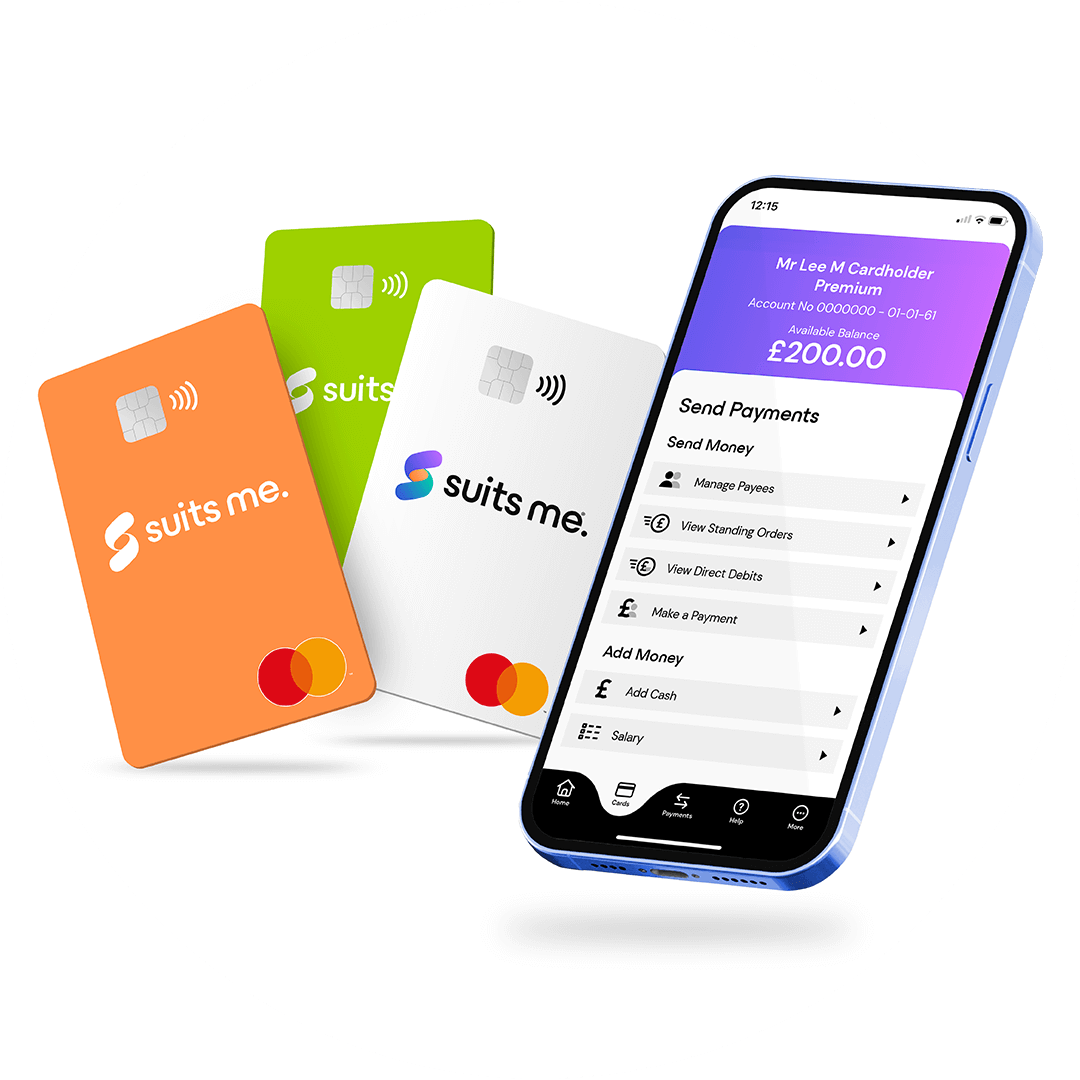
Pro tip: Use an account without overdraft facilities, like Suits Me®, to prevent accidental overspending while you focus on clearing debt.

Stop Adding to Your Debt
This is tough but essential. You cannot get out of debt while continuing to borrow. It’s like trying to empty a bathtub with the tap still running.
Practical ways to stop borrowing:
- Cut up credit cards (keep accounts open for your credit score, but make them physically inaccessible)
- Remove saved payment details from online shopping sites and apps
- Avoid overdrafts and buy now, pay later services
- Switch to debit-only spending or cash envelopes for discretionary purchases
- Cancel unused subscriptions that eat into your budget
If you need to borrow for a genuine emergency, explore interest-free options first, ask family for help, or contact creditors to temporarily reduce payments.
Prioritise Your Debts
NNot all debts are equal. Some carry serious consequences if unpaid — these are priority debts and must be paid before everything else.
Priority Debts (Pay These First):
- Rent or mortgage — Risk: Eviction or repossession
- Council tax — Risk: Court action, bailiffs
- Gas and electricity — Risk: Disconnection
- Court fines — Risk: Bailiffs, imprisonment in extreme cases
- Child maintenance — Risk: Court action
- Income tax/VAT — Risk: Court action, bailiffs
Non-Priority Debts (Pay After Priority Debts):
These are still important but don’t have immediate serious consequences:
- Credit cards
- Personal loans
- Store cards
- Payday loans
- Overdrafts
Important: If you can’t afford minimum payments on non-priority debts after paying priority debts and essentials, get free professional debt advice immediately.
Choose Your Repayment Strategy
If you can’t afford your repayments, there are formal and informal options that may help, such as:
- Debt management plans
- Breathing Space schemes
- Individual Voluntary Arrangements (IVAs)
- Bankruptcy (as a last resort)
Free, independent debt advice can help you decide which option is right for your situation.
Debt Avalanche Method (Best for Saving Money)
How it works: Pay minimum payments on all debts, then put all extra money toward the debt with the highest interest rate. Once cleared, move to the next highest rate.
Why it works: Mathematically the fastest and cheapest way to get out of debt. You save the most on interest charges.
Best for: People motivated by long-term savings who can stay disciplined.
Debt Snowball Method (Best for Motivation)
How it works: Pay minimum payments on all debts, then put extra money toward the smallest debt first, regardless of interest rate. Once cleared, move to the next smallest.
Why it works: Quick wins boost motivation. Seeing debts disappear keeps you committed to the plan.
Best for: People who need regular motivation or feel overwhelmed by multiple debts.
Should You Consider Debt Consolidation?
Consolidating multiple debts into one loan can simplify repayments and potentially lower your interest rate. However:
- You might pay more overall if the loan term is longer
- Requires decent credit to get approved
- Risk of accumulating new debt on cleared credit cards
Only consider consolidation if you get a lower interest rate and commit to not using cleared credit facilities.
Increase Your Income
EvCutting expenses helps, but increasing income accelerates how fast you can get out of debt. Even an extra £100-£200 monthly makes a significant difference.
Quick Ways to Boost Income:
- Check benefits entitlement — Use Turn2us calculator to see if you’re missing out on Universal Credit, tax credits, or Council Tax Reduction
- Request overtime — Even a few extra hours weekly adds up
- Sell unused items — Most households have £1,000+ in items they no longer use (Facebook Marketplace, eBay, Vinted)
- Side income — Freelancing, delivery driving, tutoring, dog walking
- Cashback apps — TopCashback, Quidco can generate £20-50 monthly
Put 100% of extra income directly toward debt repayment to accelerate your journey out of debt.
Get Professional Help If You Need It
If you can’t afford your minimum payments, or if debt feels completely overwhelming, there are formal debt solutions available:
Debt Management Plan (DMP)
An informal agreement with creditors to pay reduced monthly amounts based on what you can afford. Interest is usually frozen. Not legally binding, so more flexible.
Individual Voluntary Arrangement (IVA)
A formal, legally binding agreement to repay a portion of your debts over 5-6 years. Remaining debt is written off. Good for larger debts but impacts credit rating for 6 years. Learn more about IVAs.
Debt Relief Order (DRO): How Do They Work? | Suits Me (DRO)
For people with debts under £30,000, low income (under £75 disposable monthly), and minimal assets. Debts are frozen for 12 months, then written off. Costs £90.
Breathing Space Scheme
Gives you 60 days of legal protection from creditors while you seek debt advice. Interest and charges are frozen during this period.
Free Debt Advice: Never pay for debt advice. Get free, confidential help from:
Citizens Advice: 0800 144 8848 | citizensadvice.org.uk
StepChange: 0800 138 1111 | stepchange.org
National Debtline: 0808 808 4000 | nationaldebtline.org
Building Habits to Stay Debt-Free
Getting out of debt is only half the battle. Building better money habits prevents you from falling back into debt once you’re clear.
Essential habits for staying debt-free:
Plan major purchases — Save for large items rather than using credit
Track your spending — Review weekly using apps or a simple spreadsheet
Build an emergency fund — Start with £500-£1,000 to prevent emergency borrowing
Use the 24-hour rule — For purchases over £50, wait 24 hours before buying
Automate savings — Set up transfers on payday to money you won’t touch
Review subscriptions quarterly — Cancel services you no longer use
Getting out of debt is about building better habits, staying organised and having the right tools to support you along the way. A Suits Me® account can help by giving you a simple, safe way to manage your money while you work towards becoming debt-free. With no overdraft or credit facilities and easy budgeting through the app, it helps you stay in control and avoid slipping further into debt. It’s quick to open, even if you’ve struggled to get a bank account before — so you can focus on moving forward with confidence.